|
The Basics
Discounting
Net Present Value
Terminal Value
Value Added
The Decisions
Discount Rate
Hurdle Rate
Weighted Average Cost of Capital
(WACC)
The Math
Estimate Terminal
Value
Annuity Method
Market Value/Sales
Compare Methods
DCF Key Questions
Combine Action Plans
Key Points
|
Key questions
"The boss" jotted down her conclusions and the questions for consideration.
Conclusions
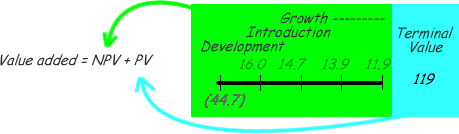
- The NPV calculation projects investment and growth required from
development through the growth phases, the short term opportunity.
The terminal value represents the long-term value to the firm. As long
as the calculation
methods are consistent, the relative opportunities of both can be compared -
short-term to short-term and long-term to long-term.
- For
outside investors or analysts, we should present the data using calculations
they trust. For internal screenings, we should keep the method simple
and persuasive to our key players.
- Using a hurdle rate as the discount rate is a stretch approach. Using
WACC, our cost of capital, is a sustainment approach.
- There a many complex, sophisticate models to predict value, but
no one today has much confidence in their numbers more than two years
into the future. It is a guess.
Key leadership questions
- Have we screened out modest projects that
over the long run will make acceptable's returns?
- Should our expected return be based on market expectations
or our historical performance?
- Should we use an industry average weighted cost of capital or an
estimate of our firm's WACC, or base it on our expectations for our
future borrowing costs
and stock price?
- Who is going to use the analysis and is the method
we use persuasive to them?
- Since outcomes in strategy formulation are measured by profitability, is the long term view better, is the annuity method or the market to sale ratio better for us?
 Compare annuity method
to market value/sales |
Combine Action Plans Cost and

Benefits to a Strategy's Value |
|
